

Webinar Replay
Teaching International Business When the Rules Keep Changing
Sanjyot P. Dunung, Thunderbird School of Global Management professor of practice and FlatWorld author, shows college instructors six ways to keep an international business course current as trade rules, alliances, and markets shift.
Updated:

Sanjyot P. DunungThunderbird School of Global Management · Author of International Business v5.0 and Global Business Management v2.0
Chapters 11
Total running time 47:46
Read the Full Transcript
Full transcript
From a speech-to-text transcript of the recording, with speaker names added and misheard names corrected. Select a timestamp to play from that moment.
Introductions
Nick Haubner: Good afternoon, everyone. I’m Nick Haubner, Director of Product and Marketing here at FlatWorld. Joined with me is Carolyn Merrill, our VP of Product and Editorial, who will be facilitating Q&A at the end of our presentation. And our presenter today is Sanjyot Dunung, author of two FlatWorld titles, International Business Opportunities and Challenges in a Flattening World, now in its fifth edition, and Global Business Management, now in its second edition. Sanjyot is CEO and founder of Atma Global, a learning content company named to Fast Company’s Most Innovative Companies list. She’s a serial entrepreneur who has raised venture capital, built SaaS products, and led global teams.
And she brings that practitioner’s view directly into the classroom as professor of practice at Thunderbird School of Global Management, where she also earned her MBA and serves on the advisory board. She has authored 17 books, including international business textbooks and a young adult novel. She sits on the boards of the National Small Business Association, the Truman Center for National Policy, and the American Leadership Project, and previously served on the board of UNICEF USA. She is also the recipient of multiple awards for her work in business and entrepreneurship. Please join me in welcoming Sanjyot Dunung.
What We'll Cover
Sanjyot P. Dunung: Thank you, Nick. Thank you very much, and thanks, Carolyn. It is wonderful to be with all of you today. I know we have a lot to talk about. Please feel free to join the discussion. Carolyn’s going to be monitoring the chat, so feel free to throw in your questions. And wherever relevant, we’ll pick up some of those questions during the process in our discussion and then also at the end. This is actually most useful for all of us if it’s interactive, so please feel free to participate with your questions. I want to thank you all for joining us today to talk about international business and global management.
Wow, what a week to be having this conversation. Yes, what is relevant in week one or two of our classes is so very different by our midterms and by the end. And that’s the lens that I’m really going to be using today as we talk about how can you keep pace? And more importantly, how do we get our students ready and make sure that they’re well-informed and well-prepared for the careers that they have chosen? We’re sort of working together as a team, and we’ve been working together as a team at FlatWorld for 15 years. It’s really been exciting.
For those of you who are less familiar, I’m sure hopefully you are, FlatWorld was at the beginning of the innovation of digital content and digital textbooks, and I’ve been delighted to be part of that journey with them as they expand and as we really become the way textbooks are. I was in college long ago, but I remember where you didn’t have content that was integrated into your textbooks, whether it’s video and all sorts of digital resources. And now that’s mainstream. And it’s really exciting to be part of that process with FlatWorld, who was at the head of the curve.
So what are we going to talk about today? A couple of things. You can see what I’ve got here on the slide. The number one thing that I’ve really honed into in both textbooks and both have been revised, International Business 5.0 just came out in September. I hope you’ll get an advanced copy to be able to review. And then Global Business Management is coming out in February, and you can certainly ask for an advanced copy. But the number one thing that I’m doing is really making sure that students understand that nothing is set in stone.
And I know that I have so many conversations with students who want to think that whether it’s educational practices or theory or whatever they see in their lives or the world around them is sort of a fait accompli or it is as said. But it’s this idea of constant change that we have to get used to. And by the way, it doesn’t matter if you’re students or educators or anybody in between. We’re all getting used to this idea of constant change. So we’re going to talk a little bit about treating today’s rules as temporary. I’m going to then also talk about, if you’re familiar with my books, what I’ve been integrating since the beginning.
This idea of taking the practitioner academic approach, taking theory, and then making sure that it’s relevant with practical realities, that’s one of the first reasons why I wrote both of these textbooks. I was meeting students and engaging with people who really had the theoretical understanding but had no idea how to apply it in their day-to-day lives, especially early in their careers. And we’re going to talk a little bit about how AI is disrupting those early careers and what that really means for how to prepare students. And then the most important thing that this whole setup for this week and this past year or two is reading the signals.
We often wait for data to show us something. Data shows us what’s happened. It doesn’t help us predict. And as a student, as somebody participating in international business or actually leading teams, you need to be able to do both. So we’ll talk a little bit about that. And then I’ll share with you what I’m hearing from employers. Would love to hear what you’re hearing from employers. What kinds of skills do they want from early graduates these days in terms of being able to apply their international business managerial marketing skills in the workplace, but integrating new technologies?
AI is just one of our most recent technologies, but just a few years ago, it was blockchain and it was digital and it was omni-channel marketing. So we’ll talk a little bit about how to be able to integrate all of that. And then I’m happy to answer any questions about both books, but also to hear from you about what you’re seeing in your classrooms, what you’re hearing from students, and really making sure that we work together to participate and make sure that they’re well-prepared. You heard a little bit about me, so I won’t belabor this point.
But yes, I do have a history and experience both in the financial, as an entrepreneur. I’ve worked and operated and done business in just about every corner of the world. Lots of stories on that. I’m not sure an hour is enough time to share those stories. I’ll drop my email in the chat later on, and you can always reach out to me. Happy to have longer conversations with that.
Treat Today's Rules as Temporary
Sanjyot P. Dunung: So we talked about this idea that the rules are temporary. And one of the things that I really have introduced in the most recent book, and some of you may be familiar with it. It was a theory that came out in the early 1990s, Francis Fukuyama. I’m really this idea that we are at the end of history. The Cold War had happened, the Berlin, everything had sort of fallen down. We were really looking at having won that liberal, and with a lowercase l, we had really been looking at sort of this end of history. And so Francis Fukuyama came out and sort of said, hey, we’ve won.
The liberal order has won, democracy, capitalism as we know it, global trade, how we do business, how we interact. We now have this as set in stone. And shortly thereafter, a couple of folks started coming out and said, no, no, no, that’s not true. It’s a fallacy. The most familiar of that may be Samuel Huntington in the mid-90s, who said there’s a clash of civilizations, which indeed has come to be true. And that was the idea that people would actually band together in their cultural tribes, often by geographic political lines, countries, but also within countries as well.
So fast forward, I’m applying this lens to what we know for business today. And just like economics went through their reality check of they didn’t know everything about economic theory, they didn’t have every principle down, We need to also be that fluid and that sort of conversant and understanding business is also transitioning. And what does that really mean for students? So we certainly want them to know the theory. You’ll see that I talk a lot about understanding the past and the history. We went from nation states trading to really focusing then on the company theories.
That was pretty much the post-World War II order. And now we’re kind of merging those two back, right? When you stop to think about it, companies around the world for a long time, global companies, were doing what they were supposed to do best, maximize shareholder value, create opportunities for their products and service, make sure they took care of their consumers, and make sure they took care of their employees amongst a number of other stakeholders. But now they’re finding that they can be disrupted overnight by all sorts of shocks.
Six Forces Reshaping Global Business
Sanjyot P. Dunung: And if we go to the next slide, what are some of those shocks? We’ve seen that in the last 10 years, right? We’ve seen all sorts of technology disrupting, changing everything. You know, my favorite example, and students always love it because it’s a tangible entity for them, is Spotify. Spotify is what, about 15, 20 years old, and it replaced the old world of how people accessed music with records and DVDs and cassette tapes. It also changed how people paid artists. It changed the whole margins of how to create a product. Not for nothing, Spotify is a Swedish company, so it also created Born Globals.
Born Globals are companies that are global from the moment they start. You have a website, you’re global is what I like to say. So it changed the entire outlook. That’s an example that students can really understand. And of course, there’s more of that in my books. Geopolitical tension. I often make sure that students understand that you can’t just be looking at your company, your product, or business. You have to have a 360 perspective. Really making sure you’re building your toolkit. And that’s what we’re there for as educators. We’re there to help them build their toolkit because we don’t know where the world will be in 10 years.
We barely know where the world will be in two years. And after this week, sometimes I feel like I’m not sure where it’ll be in a month from now. So the idea isn’t to tell students that this is the world that you will operate in. The idea is really to make sure that they have that toolkit, that they have the resources so that they can evaluate geopolitical risks, that they’re accessing information flows, that they learn to sort of really diversify where they get information. On a side note for that, and I actually put this as one of my call outs, is oftentimes people get their news online.
We know that, where they’re getting it through their social media. So I encourage students, get your news from all sorts of news sources from around the world, whether you’re reading the Wall Street Journal and the New York Times or the Financial times in Europe. And make sure you’re looking at a diverse number of news sources to really be able to start to understand. Students often tell me, I don’t know that I understand all the issues right away. And I encourage them to keep engaging because you may not understand what’s going on in a specific industry in Africa or in Asia.
But the more you keep reading about it, it’s like of an onion. The more you keep reading and listening and watching, you’re more likely to be able to learn the key things. So that’s a discipline, that’s a skill set that we as educators can help really get our students to understand the value of and the importance. Like all of our books and like all of our educational curriculum on international business and management, the trade agreements are absolutely important. But why are they important? They’re important in understanding the why. Why did we put together certain trade agreements after World War II?
You know, the motivating factor was peace, right? More important than anything else. That’s the early precursors to the EU. How have those trade agreements modified and changed? How did they bring economic and stability and political stability to countries around the world? But what has changed and why does it keep changing? And those are the things that we need to constantly be telling students how to keep up to date. I got to tell you, I just updated both of these books. I kept wondering, am I going to be out of date by the next day? Because, you know, a lot of these trade agreements were living in a disruptive moment where there are political, there’s a little political chaos and there are changes.
One, for example, that I cover is the USMCA, which is really NAFTA, right? The new version of it. And it usually renews at 10-year periods. Well, this year, in July, the US chose not to renew for 10 years, and it’s up for annual renewal. Well, if you’re a company and you have to make manufacturing decisions or development decisions, and you’re trying to figure out what you want to do in the Americas, that’s an incredibly disruptive timeframe. How do you make a decision about where to allocate capital or people in just one year, knowing that next year the rules might change again?
And so helping students understand how to be able to balance that is more important than saying just here’s the history of this trade agreement. The same applies for the ongoing spaghetti bowl of trade agreements around the world. It’s making sure people are familiar with it rather than trying to say this is set in stone and it’s not going to change because we know the world is changing in real time and it’s probably changing now in real time faster than it has in any period in the last 80 years. And that’s the other thing about the cycles of history.
We often think that what we’re experiencing is unique and never happened before. But in fact, if you take a look, history rhymes, right? It doesn’t repeat, it rhymes. And so helping students take a look at historical factors to understand what set of ingredients are now contributing to people’s concerns about trade, people’s concerns about globalization, and what we can do to improve it. We do know that over the last 80 years, globalization has led to the most improvements in people’s lives around the world. And for a long time, it did that in the U.S., but then it stopped being as productive.
So helping students understand what they can be doing in the work world to be able to address that, but also to make sure their companies are staying ahead of that curve. Climate, we know that sustainability and climate have gone through their political cycles, but most companies have integrated them. So just helping students understand where it applies when it comes to marketing. You know, people will buy products when they feel that they’re more green or sustainable. When it comes to making sure that they take a look at lower cost supply chains, sustainability is one thing. So all of the places that it can apply and integrate is what I cover in the books.
I don’t have to tell any of us how disrupted the pandemic was and global health issues. But certainly what we’ve seen this past year in the Strait of Hormuz and the Iran war, certainly there is a political issue there and geopolitical. So that covers that first box in the upper middle. But the impact on other smaller companies and midsize companies who are waiting for supplies or ingredients, I have heard from so many companies that they didn’t get their acetone in time because it’s stuck on ships. They didn’t get a specific ingredient for their process or their manufacturing or their consumer products.
So helping students understand it’s not just a geopolitical issue in an area that’s far away from the U.S., but it’s impacting companies around the world. And if you have students who are working, it might be impacting their work world as they speak. So for them, it’s an aha moment to kind of connect the dots. And for students who are hoping to work in international business, it’s a great way for them to make sure that they’re 360 looking for all those signals. And we’ll talk a little bit more about the supply chain volatility and what that means in particular areas of armed conflict. We saw this a lot in Africa, for example.
Why Companies Are Rethinking Globalization
Sanjyot P. Dunung: So companies are rethinking how they are doing globalization. So once upon a time, we know that companies really were trying to maximize shareholder values, keep costs down. It was a very simple formula. And when I say once upon a time, that was just 10, 15 years ago. Many of them all rushed to China as was encouraged and they set up manufacturing. Well, when the political tides changed, they had to relook at those supply chains. They had to suddenly decide that they couldn’t just optimize for costs. they had to make sure they could optimize for resilience.
We saw this particularly in COVID, where companies suddenly couldn’t access or source the materials that they need. So students are particularly interested in understanding how to prepare and be aware of future shocks and how to get ready. We call those black swan events. And in fact, I talk a little bit about that in the box. Black swan event, for those of you who may not be familiar, is simply an event that we can’t predict, but has an outsized impact on whether it’s business or society or communities or people. COVID is a black swan, for example, although there will be those who say that it was predictable, what wasn’t predictable was the impact at large.
So really learning from those and making sure companies are ready. But I will say on the idea of optimizing for resilience, and I talk about this as a case, is McDonald’s in Russia. McDonald’s did everything right for 30 years. They entered in Russia in the mid-90s. They got a good partner. They localized their menu. They made sure it was culturally adapted. They really grew leaps and bounds. So from a company point of view, their folks were doing a very good job of growing McDonald’s in Russia. What happened? What were they not ready for? They were not ready for 2022 and three when Russia invaded Ukraine and all companies had to exit Russia.
And overnight, McDonald’s had to sell their franchises at such a deep discount because they had not anticipated that kind of a black swan that they sold it for pennies on the dollar with a buyback agreement. But I can assure you that they’re Russian partners. The buyback agreement is for 15 years with certain parameters of the purchase price. I’m quite sure there’s some loopholes that McDonald’s will never be able to get the kind of momentum that they had. They may rebuild in Russia again in decades to come, but they lost the momentum that they had, and they did not expect it.
So helping students understand it can happen to familiar brands. It’s not just manufacturing or supply chain or behind the scenes. It is very visible products. It’s people who think they’re doing the right things from a business point of view, which they have been, but a risk comes and completely sideswipes them. So helping students understand how to be constantly looking 360 for those kinds of things.
Pair Theory With Practice
Sanjyot P. Dunung: You know, this is just a little bit of an example of how I compare and contrast, you’ve heard a lot about the practical realities. That’s really the lens I bring. Most textbooks, and this is why I do this, most textbooks talk about trade as a theory, but no application of it. And I think that today’s students want to understand, what does this mean for me? How do I use this in my work world? How does it apply? Why is it even relevant? And those are the questions that I hope you can help them answer with the content the way I’ve written it in each of these textbooks and with the exercises and with the resources.
And we have videos as well, because that’s what people want to know. What will it do for me? How can I gain from it? And there’s a lot of controversy or a lot of discussion. Controversy might be the wrong word. about the relevance of business education, especially at the master’s level. I’m sure you’ve seen some of the conversations and the op-eds and the things. Do I think it’s still relevant? Absolutely. But what it’s forcing us to do is to say, how is it relevant? And I think the criticisms often center on the fact of this, that most traditional textbooks, most traditional curriculums teach trade as a theory.
They emphasize theory over application. They ask students to memorize the theory rather than how can you apply the theory to real life applications. For example, I gave you the McDonald’s. An exercise is what might students do if they were in those roles? How might they prepare? What might be in a earlier negotiation now that they know that this is possible? So the ability to take information, to take knowledge, and then be able to have some practical exercises. The other is the static model, this idea that trade is in a finite box and we know exactly how it operates.
That’s not how it works anymore. So the real thing is how does global business work in each continent for each business type of business? So I use a number of examples to say it can shapeshift depending on where you are because companies seek to be competitively successful. And that’s still a driving factor. It’s not just if you’re an American company. And also highlighting to students, you’ll see perhaps more cases in my books about companies that are from around the world and how they are leading in the emerging markets, in the developing world, in specific areas.
Because this idea that America is at the center in international business can be very misleading for students who will be surprised when they get to their work world and find that their biggest global competitors may come from Asia, or they may come from Europe, or even Brazil when it comes to aerospace or food or things like that. So really making sure that there’s a holistic global mindset. I talk a lot about how to develop that. A lot of books function like maps and encyclopedias, I actually do a little bit more. My company Atma Global, something that I started, it’s a learning content company.
We really focus on helping people understand the why behind business culture, business practices. So understanding a country and its stage of modern evolution is important for students. If you’re operating in multiple countries. You may not get to know each one very well, but you should become familiar. So my goal is simply to give students sort of a leg up, if you will, from their peers to be able to say, hey, I kind of know the evolution of how China got to where it is today or what’s happening in the Middle East, certainly in Europe, but also companies in major new developing emerging markets in Kenya and South Africa and Nigeria, as well as Latin America of Argentina, Brazil, or Mexico.
So these are not just countries on a map. They are countries and cultures and business environments that I want students to feel that they have a really good sense of, at least at the rudimentary level. And we integrate our videos into each of them. So maybe they’ve never traveled to each of these countries. I can’t expect that they would at this early stage of their career, but they will feel like they’re actually in each country watching business, watching business be transacted. And that is a very unusual and different kind of experience than they’re going to get with other learning resources.
So I think that’s a really important thing. People learn all different ways, right? We know that as educators, reading, listening, watching, integrating all of that. And I try very hard to make sure that we use a little bit of each. Theory to practice, knowledge to application, information to action. We’ve talked about this. This is sort of integrated into every call out. You will see things like tips in your managerial toolkit, which are very hands on ways for students to be able to apply this knowledge. I also give a lot of information for students on how to find a job in these areas, because I’ve heard over the years, because I’ve taught, mentored, worked with, hired students at every stage of their career.
And the first thing they want to know is how do I get a job in this? How do I how do I work for a company? And they’re often surprised, for example, to hear that Unilever, a large consumer products company, hires people to do cultural consumer safaris in Asia, in Africa, wherever. What does that mean? They have anthropologists. So they’re hiring anthropologists. A lot of students are surprised to hear businesses doing that, to be able to go in and see how people are using Unilever products so that they can improve, they can expand, they can do all sorts of things.
So do the tech companies, by the way, right? So it’s expanding students’ understanding of how to apply their skill sets, their fields of interest into the careers that they want. I even talk a little bit about the whole NGO UN world because people are surprised that there are private sector companies that work with them. Every NGO, non-governmental organization, and the UN hire private sector companies to actually transact the work for them in all parts of the world. And students are often very excited about being able to work for these companies, whether it’s manufacturing, construction, whether it’s development, consumer products.
So really being able to expand how people can think about where those careers might be and how to apply that. So again, a lot of information to action is just built into every single chapter. And I think it’s an important factor and one that I hear students really appreciate. So you’ve heard I’m an entrepreneur. That’s sort of the lens that I’m always going to bring to everything. But we also know that more young people are starting companies than ever before. So how do you take the strategy? How do you take that strategic orientation? How do you apply it to the entrepreneurial realm?
I also talk about intrapreneurial a lot, which is companies who now set up, and they’ve been doing this for 30 years, set up groups inside of companies to help develop new ideas, new innovations, new products, and new markets. So there’s enormous opportunities for students to develop these skills, and it’s a skill. People always say to me, aren’t entrepreneurs sort of born that way, as if it’s a physical characteristic or something? No, we develop the skill. We are comfortable with risk. We talk about that. But a lot of the students are really eager to take that entrepreneurial understanding and apply it to a global business.
And like I said earlier, every product, whether you’re selling clothing, whether you’re selling a drink, whether you’re selling some sort of a manufactured product or a tech application, you are global from the moment you have a website. Anybody in the world can buy from you. Whether or not you can deliver that product is a different question. And I talk about that, but you can sell to anybody, anywhere. And it’s very exciting for students to be able to think that way.
Teach Students to Read the Signals
Sanjyot P. Dunung: We talked about this a little bit about signals, but a lot of times people wait, as I said, for data to come across their desk, across their computer, and they look at what the data shows them. And that is indeed very important. But what we really need to be teaching students to do is to be watching for signals early on. So if they’re in that company that is reliant on a supply chain that comes through, for example, the Strait of Hormuz, they should be looking for those signals or comes from Asia. They should be looking for those signals to see, might this disrupt my company or my unit’s products?
And what do we need to do to get ahead of it? Everybody talks about AI and certainly it’s the buzzword, but I took a different approach in the book rather than have a standalone unit because AI is simply the next version of a tech tool. Very powerful, but it’s a next version of a tech tool. And there’s really three different buckets that you need to be looking at. There’s research and certainly the large language companies are focused heavily on research and we’re competing extensively. DeepSeek, for example, is a born global from the moment they opened and started three years ago.
The middle bucket is development application. You see that a lot with Facebook and Microsoft and the others. It’s how to take those AI capabilities, the LLMs, and how to be able to engineer with it. And then the third, which is what most companies are using and will be using and where students will sit, is in the application. So what’s an application? Right now, AI is embedded into almost every customer service application around the world, right? You use Shopify, you’re on Amazon, anything. Think of a hotel, an airline. It’s something that’s very real for students. But what happens when your customers are around the world and they’re engaging with that kind of customer service that’s digitized?
So really being able to think of it in a 360 point of view, I talk about that a lot, of really making sure students understand, for example, that how customers around the world take a look at a product or service is culturally influenced. And it will depend on those cultural influences on whether they rate a product good or bad. For example, I’ve integrated into recent editions, both of the editions that we’re talking about, the concept of NPS, Net Promoter Score, because I found that students were coming into the work world with interest in international marketing, but no knowledge of NPS, which is a data-driven analytic.
Just a quick note on it. If you’re not familiar, I hope you’ll take a look at it in the books. Number one, it is in there. But certainly you can take a look at it. The idea is that the higher a net promoter’s for, the higher a customer value is your product, the more you can charge for it. And the easiest example is Starbucks. You pay more for a premium cup of coffee from Starbucks because it’s reliable. You know what it’s going to taste like, whether you’re sitting in Chicago or whether you’re sitting in Tokyo.
They have standardized it to make sure their global customers all feel that the quality and the service. So Starbucks has a very high NPS, and that leads to their high ability to charge. And students are often fascinated by that. So it’s a very important data metric. And being familiar with it, we’ve all filled out those surveys, right? Right on 1 to 5 or 1 to 10, whether you liked a flight or a hotel or a product. Tech companies use it. Amazon uses it. Companies use it behind the scenes also with their manufacturing vendors to make sure that they’re getting the best quality service and stakeholder engagement.
So I talk about what the theory is, but also what’s the actual tool and how do they do that? So that’s a call out that makes it very real. And how is AI impacting that? We’ve talked about the trades and tariffs, and there’s ongoing disruption. And again, this idea that if we said, okay, we have all the disputes that we need to understand done today, we have missed the signal because it’s what we don’t know that’s going to come around the corner that is more likely to disrupt students’ workplace. So that’s what they want to understand is how do I look at the signals?
What should I be reading? What factors might be relevant? And again, there’s no right or wrong answer, right? I think people around the world at every level of their careers are constantly questioning what signals should we look for, which ones are relevant, and it’s shape-shifting. So the idea for students is really to say, look for those signals, diversify your sources of information, but understand that we can’t be rigid. We have to be able to challenge our assumptions, and we have to be willing to get new information. So that’s a mindset shift, not necessarily just a resource shift.
Same way it goes with supply chains, really making sure these days AI is now embedded so you can get origin of source manufacturing. You know exactly where your products come from. The challenge for a lot of manufacturers is the reliability of that information from the original source. So helping students understand that whole process and how it can be relevant. And I use De Beers Diamond, their whole thing in terms of how they walked through armed conflict since the 90s and how they tried very hard to use a sustainable model. And it’s still coming under some challenges once again.
Again, just because they have that model of a certification that it was a diamond that did not come from armed conflict and they had that data in front of them 20 years ago, things change. And that’s exactly what’s happening. So it’s this idea of constantly monitoring information, not necessarily assuming that a problem is solved, and therefore we don’t need to worry about it anymore. So that’s another thing that you’ll see more and more of. The geopolitical tension, we’re seeing this everywhere. And again, the idea that we don’t know if things will ramp up, if they will ramp down, how that will impact students, their workplace, the jobs that might be available for them.
So preparing students and preparing people at large for change is one of the biggest areas of focus for all of us. It’s really something, as human beings, we resist change oftentimes. We prefer the familiar. It makes us feel safe. It makes life feel predictable. That’s very understandable, but we’re operating and those who can feel comfortable with change, who can operate within it and also find ways to succeed, those are the students who are going to do the best. And so really giving them those skill sets to be able to do that.
Four Habits for a World That Changes in Real Time
Sanjyot P. Dunung: I think I covered a little bit of this already, but interpreting the global signals in real time, but also getting ahead of them to the best of your ability. And that really comes from diversifying your sources, not just online, but real person, being able to talk to people, helping students understand the diversity of those information flows is really critical within a company as well. Political and economic shifts, this week speaks for itself on that one. I think we’re all still trying to read the tea leaves. It doesn’t matter what side of the political fence you’re on, it was a seismic week.
And so the impact on businesses, you know, I know I was talking to somebody who runs a consumer products firm that makes jams and all sorts of different consumer products. And last year, they were very stressed because they suddenly had to change all their packaging. They were looking at having to adapt their formulas and things like jams and coloring and all those. As a consumer, we may have one perspective. As somebody who is in charge of running a company with all of that, they may have a different perspective because their goal is to to make sure the company’s profitable, that they don’t lose money, that they don’t have to lay off employees.
So helping students understand that balance. Well, now suddenly fast forward, that company is now going to be wondering next year, will the rules change again? Will they change again versus packaging? What ingredients are allowed to be in a particular product? So we saw that with climate and sustainability. And most companies sort of said, you know what, we don’t really worry about government regulations. We’re going to do what we think is right in these areas. And that’s the path that they’ve pursued because they already invested heavily on sustainability in some of their areas of manufacturing. We can expect the same, but the more important lesson for students is be aware, be ready for it.
And students are often unprepared for those kinds of political shifts and how it impacts a company. There’s an aha moment. I often, you know, students are often surprised when I talk a little bit about how the EU regulates and how the US regulates. And it’s very different. And if you’re a company that sells into both, you literally almost have to have two sets of operations and how that adds to costs. So you’re looking for more international businesses, really look for more synergies, stability, long-term opportunity so that they can invest. Helping students understand that is key.
Living with uncertainty, you know, I feel a little Buddhist in that moment right there. It’s really a very different place for most students in today, for most people. We have had a very predictable environment for decades. And now we suddenly have to operate with daily uncertainty. And that’s very hard for companies. So helping students understand that, not because there’s some formula that will succeed, but rather making sure that they understand that uncertainty is part of the daily ingredient. And how do you make sure to integrate that when you’re doing strategic planning, when you’re doing your omni-channel marketing, when you’re building your supply chains, and And when you’re on the teams to do that, making sure that you’re able to be a part of the conversation.
I think that’s our goal, especially for their early careers, making sure that they’re part of the conversation and that they can add value so that it contributes to their career development. Adapting quickly in dynamic environments.
Build the Skills Employers Want
Sanjyot P. Dunung: This is a lot of what companies are looking for as well. They’re looking for this flexibility, right? the agility. Cultural agility is important around the world. Culture is not just geographic cultures and national cultures, it’s organizational culture. So really making sure that students can operate with flexibility. I have a whole section on where I talk about a global mindset. Doing business overseas is a task in foreign countries, but developing a global mindset is an operational toolkit. It is from the moment you hear about a product or a service or a tactic, you’re able to put on a global thinking cap and be able to think about how it’s going to apply in all of your markets.
That’s a skill set that students can develop. We integrate cultural anthropology into that, but really making sure that it’s the global mindset that we want to nurture and encourage students to develop. And it isn’t something that’s just going to be developed for the couple of there in our classroom. It’s a lifelong skill set. So how do you continuously refine it, develop it, improve it? That continuous improvement, continuous professional development skill set is something that we can integrate and really nurture our students for. Same with strategic thinking and really operating as managers under uncertain environments. And it’s not just operating for ourselves, but it’s leading organizations, people, groups with uncertainty, making sure that different cultures see the concept of certainty and uncertainty differently.
So really making sure that if you’re managing a cross-border team, that you’ve integrated all of those different cultures and made sure that people feel part of the solution in your company. A lot of seasoned managers and leaders who have come through being old hands and worked in different countries already integrate that mindset. So I use examples of those to help them understand how you can do it for yourself in your environment.
Where Students Put the Skills to Work
Sanjyot P. Dunung: So what are some of the tools you heard me talk about, Atma Insights? Those are the tools that we have in our videos to be able to use. They’re actionable videos. They showcase a business practice on a specific country, oftentimes quick one to five minutes. But it’s a great way for students to be able to see it. The contemporary, I’ve updated all the case studies, but I oftentimes continue to talk about the same companies so that we can see the evolution of how Google has operated and not operated in China, for example, because it might surprise students to know that Google is not available in China. toolkit tips, managerial practices.
So there are those in both books, but the real idea is how do I take what I just learned in this section and how do I apply it into my work world? And what are some very tangible, direct ways to be able to do it? Again, it’s that practical framework, it’s the tools and being able to do that. And a lot of the exercises are not yes, no, It is not a regurgitation of the trade theories. It is really, how do I take this knowledge and how might we apply it into strategic decision making? Again, no right or wrongs.
It’s really to develop a skill set that we know is going to be very important in the future of work. And I know that Carolyn’s here. She can probably tell you how to access the books. But if we put both titles up. There. So we have international business 5.0 and global business management, which is coming out at 3.0. Happy to answer any questions you might have, any comments you might have in terms of the topics that we’ve talked about, a little bit of what you’re seeing in the classroom.
Teaching Comparative Advantage When Tariffs Change
Carolyn Merrill: Sanjyot, I am curious. We have these topics that are more theoretical, like comparative advantage. How do you teach a topic like comparative advantage in a world where tariffs change things so dramatically? So, again, you’ve talked a lot about agility and about uncertainty, but it is a challenge in certain topics to blend theory and application in your rapidly changing world.
Sanjyot P. Dunung: Absolutely. So I think the most important thing for students, and I think as educators, this is what we do, is we need to know where did the theory come from, because there’s usually a practical base to it, even if it’s historical. So what might have been the different tariff regimes? How might people have seen tariffs 200 years ago? What didn’t work? What did work? And then moving over into current times to sort of use that whole historical landscape. because oftentimes if you don’t have that historical reference point, we can misinterpret the signals for today. We can misinterpret why and how we should respond.
So understanding this idea that there’s trade as a zero sum game is distinctly different than what’s been operating in the last 80 years, right? The idea over the last 80 years, and it worked in large part, we have the WTO, the World Trade Organization, and its various versions, was that trade can be beneficial for everybody. And in fact, if you’ve traveled into some of these places around the world, and even here, lifestyles and incomes, the average income in America has improved. That doesn’t mean that everybody has improved equally. That doesn’t mean that everything has worked perfectly, which is why you see the pressures now to readjust what we do with trade and how we do it.
And I don’t think that we’ve come to a final answer. We don’t know what that mix is. But I think what we’ve seen is the most disruptive mechanism is an arbitrary tariff that’s placed in the morning because in the morning of a day and might change literally within 24 hours because the companies that are impacted are the ones who have to scramble. They’re the ones without an opportunity to have recourse. They have employees, they have customers, they have supply chain issues, they have a number of factors. And so really making sure that students understand how to put the lens on as an employee inside of a company working to address some of these things.
We talked a little bit earlier about the fact that by and large, companies prefer to operate just because it’s easier. or each of us does. And when you think about it, right, you want to know what your revenues are, what your expenses are, how to invest, whether it’s a property plant, whether it’s employees. These are long-term capital decisions that rest on knowing what the trade rules are. So we do have some existing mechanisms, which I help students understand, that you can actually use those existing mechanisms in the WTO for companies, Airbus and Boeing, for example, took 17 years to resolve some disputes about subsidies, but it was resolved in a way that both companies felt that their issues had been met.
It comes under the legal arm of the WTO. It is less disruptive. Neither company had to lay off employees. Neither company woke up and found a subsidy on their products and their airplanes overnight. So helping students understand how you can actually dispute a tariff or a trade issue, but through a mechanism that’s more stable, that’s more transparent, that has laws at the basis of it, which is what most companies want. And can I just add real quickly, Carolyn, if anybody wants to reach out to me personally, feel free to do so on LinkedIn or through Carolyn also.
Nick Haubner: So if you were not able to leave your comments in the comment box or anything like that regarding getting an examination copy, you can also go to our catalog at flatworld.com and you can find more information about both books there and request an exam copy. So thank you so much for joining us. Thank you, Sanjyot.
Sanjyot P. Dunung: Thank you, Carolyn.
Nick Haubner: And we will see you next time. Thanks, everyone.
Sanjyot P. Dunung: Thank you.
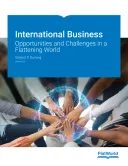
International Business: Opportunities and Challenges in a Flattening World views national borders as bridges rather than barriers, integrating strategy, culture, and entrepreneurship to explore global opportunities and practical theory. Version 5.0 adds Spotlights, refreshed company examples from around the world, and 72 short videos.
Request an Examination Copy of International Business v5.0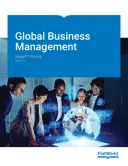
Global Business Management covers leading and managing a global organization in an increasingly complex geopolitical environment, from a practitioner and academic perspective on the changes that challenge long-held assumptions about trade, globalization, economics, and management.
Request an Examination Copy of Global Business Management v2.0How Do You Teach International Business When the Rules Keep Changing?
Six ideas from Sanjyot P. Dunung's webinar, drawn from her Thunderbird classroom and the new International Business v5.0 textbook.
Name the end-of-history fallacy
Dunung starts with Francis Fukuyama, who declared in the early 1990s that the liberal order had won and the rules were set; Samuel Huntington answered that people would band together in cultural tribes. She uses the pair to show students that today's trade rules, alliances, and markets are a snapshot, and that business is in the same reality check economics went through.
Make a wide news diet a discipline
Dunung's students get their news through social media, so she sends them to the Wall Street Journal, the New York Times, and the Financial Times, and tells them to keep reading even when an industry in Africa or Asia makes no sense yet. The news peels like an onion, and the key things surface.
Teach a trade agreement by its why, then by how it moves
Dunung teaches the postwar trade agreements as peace agreements first. Her current case is the USMCA: at its July 2026 joint review the United States did not agree to renew it, so the agreement now comes up for review every year, and a company allocating capital or people in the Americas plans one year at a time.
Run McDonald's in Russia as the black swan case
McDonald's did everything right in Russia for more than thirty years: a good partner, a localized menu, steady growth. Then the 2022 invasion of Ukraine forced an exit, and by Dunung's account the restaurants sold for pennies on the dollar with a buyback agreement. The exercise: what would students do in those roles, and what belongs in an earlier negotiation now that they know this is possible?
Teach AI as the next tech tool, in three buckets
Dunung's textbooks skip a standalone AI unit and treat AI as the next version of a tech tool with three buckets: research, development, and application, where she says most students will work. Customer-service AI now meets customers around the world, so Dunung pairs it with Net Promoter Score and Starbucks: a reliable cup in Chicago or Tokyo earns the premium price.
Treat a global mindset as an operational toolkit
In Dunung's words, “Doing business overseas is a task in foreign countries, but developing a global mindset is an operational toolkit.” Students carry that toolkit to every product, tactic, and market, and keep refining it for life. Cultural agility, she adds, covers organizational culture as well as national culture, and leading a cross-border team means knowing that each culture reads certainty differently.
Three Facts Behind the Webinar
FlatWorld checked each figure at its source.
The term of the USMCA, which the United States did not agree to renew at the July 2026 joint review. The agreement now comes up for review every year.
USMCA Article 34.7; Office of the U.S. Trade Representative, July 1, 2026
The charge McDonald's expected when it announced its exit from Russia in May 2022, the black swan in Dunung's case study.
McDonald's press release, May 16, 2022
Short videos within the chapters of International Business v5.0, Dunung's textbook for the course.
FlatWorld catalog, International Business v5.0
How Do You Teach Trade Theory When Tariffs Change Overnight?
Carolyn Merrill, FlatWorld's VP of Product and Editorial, asked the closing question. The button plays her question and Dunung's answer.
How do you teach comparative advantage when tariffs change things so dramatically?
Dunung starts with where the theory came from and how people saw tariffs in earlier eras, so students can read today's signals against history. Then she shows the stable route for a trade fight, the WTO's dispute process that Airbus and Boeing used, against a tariff that can change overnight.
Source: World Trade Organization, dispute DS316, dispute DS353
Who Is Sanjyot P. Dunung?
“Prepare students not just to understand the world, but to help shape what comes next.”
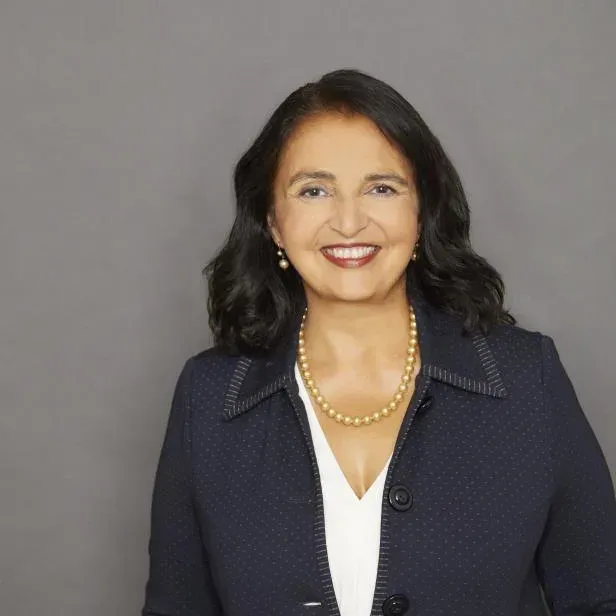
Sanjyot P. Dunung is founder and CEO of Atma Global, named to Fast Company's Most Innovative Companies list, and a Professor of Practice at Thunderbird School of Global Management. She has written seventeen books on international business and writes International Business: Opportunities and Challenges in a Flattening World, now in version 5.0, and Global Business Management, now in version 2.0.
Bring International Business Into Your Course
International Business v5.0 adds new Spotlights, refreshed company examples, and 72 short videos. Global Business Management v2.0 covers leading and managing a global organization as the rules of trade and geopolitics shift.