

Workshop Replay
How to Use AI in Your Classroom
An Information Systems & AI Workshop with John Gallaugher. The full hour, recorded live on September 24, 2026. Pick a chapter to jump straight to it.

John GallaugherProfessor at Boston College · Author of Information Systems and AI v12.0
Chapters9
Total running time 1:02:02
Read the Full Transcript
Full transcript
From the recording’s auto-generated captions, with speaker names added and misheard names corrected. Select a timestamp to play from that moment.
Introductions
Nick Haubner: Good afternoon, everyone. I’m Nick Haubner, Director of Product and Marketing here at FlatWorld. Before we begin, I wanted to let you all know that we will be taking questions at the end. So if you have any questions throughout the presentation, feel free to use the Q&A box or the chat box and just know that we will get to your questions when we open up Q&A. Now, it is my privilege to introduce today’s speaker. John Gallaugher is a professor at Boston College, where his work sits at the intersection of business and technology. Apple has named him a distinguished educator, and “Bloomberg Businessweek” has recognized him as one of its most popular professors.
His textbook has been adopted at more than 450 institutions nationwide and has twice won the Texty Award for Excellence. This November, it launches a new edition, “Information Systems & AI: A Manager’s Guide to Harnessing Technology,” version 12.0. Outside the classroom, John has mentored student founders who went on to Y Combinator and Techstars, and some of them have even built companies valued at over $1 billion. Please join me in welcoming Professor John Gallaugher.
John Gallaugher: So thank you very much for the intro, Nick. I appreciate that. And I’m really grateful for the folks at FlatWorld who have helped the text continue to come forward at a pace that really is unheard of in the textbook industry. I’m really glad that we’ve been able to introduce new versions of the textbook every year, every year and a half, and this is going to be version 12 of the textbook. And it’s been great to have that kind of currency, and it’s wonderful to work for a company where the team really comes together to deliver the product to market with a kind of urgency that we need in business and in technology.
So for example, our textbook, I think, was the only one at the time that was discussing ChatGPT before November 2022. We had a call-out on GPT 2.5, and it was interesting to get feedback from some of the faculty that said, “Wow, I can’t believe this is in my textbook. It’s exploding in the media this week,” even though it had advanced very significantly. So that’s great. So thank you everybody, for your interest in adopting this, and so many of you have sent email and LinkedIn messages of encouragement or ideas for new versions, and I really appreciate that.
And we’ve got a good day today. I would say it is a good day because AI hasn’t killed us all . So any day when we’re not above that 10% threshold is probably a good day. And I think there are certainly a lot of goosebump-inducing moments that you’ll have in your class, but we’ve really tried to load up version 12 with those goosebump-inducing moments. And we’re in this situation where the data center buildout is larger than what we’ve done in building out the railroad system, the interstate highway system, the Apollo program. Nvidia crossed $5 trillion.
We’ve got a dozen firms that are in the four comma club. And the finance majors lean forward and pay attention when we discuss things like the DeepSeek models that were developed in China coming along and Nvidia losing more than half a trillion dollars in a single day. So, the students that used to show up in class, and maybe they would slouch a little bit, well, they’re now coming highly caffeinated and leaning forward with their eyes open because they’re recognizing that they’re living through an era where business and technology has a tremendous amount of uncertainty and where you and your classroom is going to be an opportunity for them to learn more and to prepare for a world that we’re seeing how it emerges.
So, a little bit about… You’ve seen the intro. Thank you very much for that. But I really want everybody to understand that I’ve spent the past few years living with these issues of AI ruining our courses. And what we did before was we would ask students for some feedback for thoughtful answers, things that they would submit, presentations, and now we’ve got a situation where you can just take a question and paste it into a prompt and get grad student quality.
The Era of AI in the Classroom
John Gallaugher: And so, the question that so many of us are struggling for is: what is the class for when these kinds of explanations can happen for free? And so one of the things that I hope we can do is leave you today with a bunch of things to consider that you can leverage and use right now. Just to give you an idea, the biggest shift that I’m seeing that AI allows us to do is to really turn our students into creators and builders. So one of the things that I think is very interesting, some of you probably follow Ethan Mollick, who’s a professor at the Wharton School, and he had his MBA students build startups from scratch in a four-day challenge, just four days.
And when he judged these against a semester-long class, he found that the students that were using AI were an order of magnitude stronger than the pre-AI students that used an entire semester. So now we’ve got a situation where the knowledge itself is not the scarce skill. The scarce skill is knowing what to ask for, how to evaluate, how to apply. And the exciting thing for you as a faculty member is your students aren’t going to be passive participants in your class. You can really have them building. So that’s what we’re going to be going through here today.
We’re going to give you a bunch of examples. Hopefully, in our time together, you’ll come away with several ideas that you can either use directly or you can adapt directly into your courses, and you’ll certainly see a bunch more of these in the next edition of the book. But anybody can participate in the seminar, even if you’re not an adopter for the book, but if you do that, that’s great. And so as we cover learning and what’s been happening in the market, it’s really been shocking. Everybody has access to AI, and it’s sort of dismaying for me to hear educators that think that the answer might be, “Stop using AI,” or “Remove AI in your classroom,” or “Shut down the laptops.”
Teaching in technology, and two of the classes that I teach are students do a heavy amount of programming in them. We used to rely on Stack Overflow, and that’s a place where programmers ask each other questions, and they get answers from the broader community. And Stack Overflow questions dropped by 70% shortly after ChatGPT was introduced. And I feel this very acutely too because I have two YouTube channels. One has over 10,000 subscribers. It’s teaching students how to build Mac applications, and I use that in my class. I teach part of my class as a flipped class.
And in two weeks after Apple introduced agentic AI built into their tool for building apps, their free Xcode system, the number of accesses that I had on my YouTube channel dropped by 80%. So the sort of old way of approaching pedagogy really needs to be changed for the new era that we have in AI. So a lot of us are thinking through and saying, “Hey, AI has ruined my course. The old assignments that could be solved with a prompt are gone.” And what we really want to do is we want to think about how we could trade this for things like critique, student research, presentations, demonstration, having students defend things, critique each other.
And one of the ideas that I like the most is students take possession of this knowledge and try things out are fast style presentations that are in the style of a poetry slam. And I’ll give you lots of different examples of this during the class where they can do generative AI poetry slam or generative AI slams or securities slams or privacy slams. And what’s interesting about that is if a student is getting up there and presenting, well, they can’t just take the results of a prompt, especially if you have an opportunity afterward where their knowledge or their understanding is going to be stressed out by questions from others they have there too.
So, we used to have to rely on students spending a semester learning engineering and computer science and design. Now they can do that with this team that they can dispatch via AI. And another thing that I think is really important for faculty that want to use these tools is all of the major LLM firms want to court your students, and they want to give them stuff. So I would reach out and try to find out who the campus reps are for the big firms. So we just had somebody from AWS come to my class on Monday, and he offered $250 worth of access to my students.
Many of them are distributing swag. You can have those firms in a bake-off, and that can be a learning opportunity. Sure, there’s a bit of a marketing that’s in there as well, but evaluating those things is significant. And if your universities have any policies that sort of prevent you from doing this, I think your role as a faculty member in advocating to change those policies is really critical. So we need to make sure that we’re… approaching our learning, our pedagogy for an AI age, and you’re going to find that in the new edition of this book.
So exercises throughout every chapter have been rewritten for the AI age to increase student engagement. You’ll see that in the sample chapter, which will be available shortly after this to everybody that is interested in that kind of thing in the Netflix chapter. But you’ll see a whole bunch more that is coming in there as well.
AI Classroom Design
John Gallaugher: So, great. And I’m going to give you some examples of this as well. So, your classroom really is part of the opportunity to create these wonder… It is the opportunity to create these wonderful experiences, and you’ll see lots of photographs of students in here. These are actually my students that have built real things using AI, and I’m leaning even more into that this semester. And it’s one of the challenges is the material is changing so quickly, and the tools that we’re using are changing so quickly. But you’re seeing the results of real things that we have here.
So, as we approach this, you can really arrive at this, AI ruined my course and it’s understandable why folks are seeing that. And if you could take your old questions, your old take-home exams, your old essays, put them into a prompt and get the result back, that’s bad. None of that stuff works anymore. But we’ve kind of had a version of this problem for a while. For years we’ve had rich kids playing, paying smart Kenyans to do their homework for them. But now we have, everybody has the ability to do this, and you can paste it into a prompt at 2:00 a.m. and you can get the answer back.
So, sure it has ruined the old way of doing things, but a polished answer really was never evidence that students had understanding. And grading the answer is perhaps not the best way to consider approaching things in the age of AI. So, what we want to do is really try to leverage lots of new opportunities here where students apply AI in course concepts and then show what they know. So we’ll see a bunch of different examples in here, but you can consider not just a write-up, but maybe students can create a model, a built technology solution, maybe a web app or an app that can run on a smartphone, a slide.
You really want to grade what students are learning, what they’ve worked out, what they came back with that was wrong, what changed and why. And these kinds of student experiences where they’re sharing publicly is extremely critical in the age of AI because things change so fast. I remember at the start of the previous semester when I was teaching a software development class with iOS, how to build iPhone apps. I started the semester saying, “Well, I want everybody to remember if you’re using AI, that AI can’t write your code and AI can’t look at your user interface.”
By the end of the semester, AI was writing code, evaluating it, detecting errors, and it could create its own user interface and see where things were on screen. So when you bring students together, one of the things I regularly mention in class is that the we is smarter than the me. And we really want to provide that opportunity where we can encourage students to share what they’re finding, best practices, insights, where I learn a lot from them, and you’ll find that your result, your role is really shifting from straight-up lecture and involving a lot more of coach and facilitator, and really helping students take possession of knowledge and then present and share that knowledge to everybody else.
The New Way
John Gallaugher: So we really want to go from answers to evidence. We see lots of different examples and ways that things are changing. So, the finished answer really becomes things like a prompt or what came back or what’s changed and students reflecting why. Instead of a generic answer, you’re comparing different approaches. You might compare two sources. You might compare trade-offs. A code or a prototype submission will now have tests, failures, fixes. You might have a live demonstration that people can try out. And that Q&A after any of these presentations, I think is really significant because students, again, are really demonstrating their learning from applying any of the course concepts using AI.
You’ll see some of these things in the Netflix chapter, for example. So here is a good example. Previously, that chapter was filled with sort of questions that now can be answered in a prompt. And instead, what we’ll have students do is really reflecting on some of the learning that happens in that space. So for example, Netflix has always been a data-driven story. Well, now we’ll ask students to audit their own home screen. They can pick three rows. They can attempt to figure out what data Netflix has on you to bring forth this kind of customization and encourage them to compare with a classmate to submit the screenshots.
So, those kinds of things, again, really require students to get out of the traditional submitting a written answer and instead reflect on what they’re learning about and seeing how it impacts their lives. The security chapter, for example, has them actively go out to Have I Been Pwned and see if their email appears anyplace. They’ll screenshot those incidents. The software chapter has them build a coding agent and give it a small task once without any deliberate instructions in the creation, and the other with as we learn more about how we can move beyond vibe coding and create a set of instructions that are typically called an AI, the agents.md, and we’ll see how those things improve.
So that our students are thinking beyond buzzwords like vibe coding and really thinking about the ways that technology are being used currently in industry. So lots of cool things that students can do to experiment with this kind of stuff. And we’ll give you just a few examples of this, and I’ll try to go through them quickly. So one of the interesting things that students can do is just to verify a sprint. And I’ll give you a bunch of different examples, but this is just one of them. So, one of the things that you can do is, okay, here is a claim, test it.
So, you can ask students to sort of surface the answer, see if they can identify issues where the technology was correct, where the technology was incorrect, go to the sources. And I have here just a very brief example of a claim that was in the textbook about Chegg. So I don’t know if you had heard this, but the Chegg CEO a few months back told investors that it was the first example of a stock falling more than half of its value in a day, a publicly traded company that openly blamed AI for its revenue collapse.
So if you don’t know Chegg, this is a company that they initially got into textbook rentals, and then they have notes that they offer online. And now all of a sudden, the answers that they would get from this company can be offered up by AI. And one of the things that’s interesting is when the students took this claim and put it in the prompt, what they found out was AI was correct to be able to say that Chegg’s claim is accurate. But when students went back to the source, they were able to find out, well, yes, it is somewhat accurate, but Chegg started to fall over 90% before ChatGPT 3.5 was introduced.
So the decline had happened initially, and blaming AI for the entire collapse of that firm wasn’t necessarily a story. And what’s interesting about these kinds of verification sprints is that students really reflect on, “Oh, okay, what kind of answer am I getting back? Are there resources that I can verify?” And you’ve often heard about the human in the loop. As we teach our students about AI, it’s not just having human in the loop, but human involved in decision-making and really making sure that the students leave our class with this idea that I need to verify all of the information that’s there.
And after I make those verifications, then what has changed? Have I gone back and put more parameters on AI and still leveraged my AI assistance? Are there things that I’ve challenged? Do I know more about using AI effectively and how to make sure that I’m getting back answers that I can use and answers that I can bet on? So lots of interesting examples for you to explore. I’ll let you check out some of those things as well. Also, just to give you another example here, that sort of design loop that we have. So, students love sharing their experience.
So when students are involved in attacking a challenge, using a product, debriefing their classmates on it, and then sharing what they’ve learned and insights to improve, that’s a far better way than simply having them read bullet points in maybe the current lead table of which AI is best, for example, because that’s going to change regularly. So lots of different things that we can dive in and as mentioned, you really are changing to be more of a coach, a reviewer, a challenger We want our students to learn AI by using AI. So lots of different ways that this traditional lecture is changing, but I think in really positive ways.
Again, one of the examples that I mentioned before, and we start this out right in the first chapter. So encouraging students, letting them know in the first chapter, you are going to be a participant in this. And you can do this now without even offering them the chapter. But one of the first things that we set up is what we call the peril and promise slam. So if you’ve read the textbook before, we usually start out or we always start out that first chapter with the promise and peril of technology. Things to get really excited about because our world is changing in very positive ways.
Things to be terrified about because, well, it’s gotten even worse when really smart people are saying AI has a 10% chance of killing us within a decade. But what’s interesting about this is with the promise and peril slam, you can open up a Google Doc and have students identify a particular topic that they think is promising, a particular topic that is very concerning. Have them give a one-minute presentation, poetry slam style. Have the TA vote on the three scariest or the most promising, or set up a voting mechanism. Right from the start, students are diving in.
They’re taking possession. They’re finding out additional things and bringing it into class on their own. And you can even question students’ claims. How accurate is that? And set them up for the rest of the semester. How do we know that we can trust that bit of information that you’re presenting for us? Now that will continue. The AI chapter has a generative AI slam. So two to three minutes where everybody shares cool tips that they have. The class votes on the most useful tip. Again, really useful because these things change very regularly and students are walking away with new things that they’ve learned from each other.
The security chapter has a hack slam. So everybody is charged with finding a security incident that had occurred maybe within the last year, so perhaps it’s not in the textbook. Although the textbook was just finished just a couple of weeks ago. And in rapid fire, have them talk about the vulnerability, the damage, what the manager should learn, so that it doesn’t happen to you in the future. The software chapter has a software failure slam. The hands-on chapter has an AI hack battle slam. And these kinds of things, students, again, they arrive in class filled with excitement.
Adrenaline is flowing. They’re bringing their caffeine. Nobody is a sloucher in these kinds of experience. There’s laughter. Students become incandescent as they’re presenting their results. Really wonderful things. So, we continue to go down here. There are lots of things that we can do to make AI more visible, and these are just some ideas. And again, I don’t think I need to go into a lot of these in depth, but you can use them as bullet points that you can build off of. But in any AI assignment, you can ask, what is the AI used for?
What worked? What failed? What surprised you? Verify, revise. What did you reject and why? And how did you know that you could rely on this for your work? Now, this is something that I’m leveraging in my software development classes because students are using AI all the time. The very first semester when we had high-quality generative AI, and it’s got even better in the past semester, I found students were submitting clearly AI-generated answers. Well, now what I ask them to do is to reflect on the answers that AI gave them, and to provide the answers to the sort of questions that you see here in that reflection.
So an AI reflection has become part of every single submission that we have. Again, students are going to be using AI. That’s going to be something that they’re going to have in practice. We want to make sure that the students are the most effective users, and they’re constantly thinking about, “Okay, how can I be a better user? How do I know I can trust this?” And having them share them, particularly in public forum, are huge wins for you as a faculty member. I hope you find that that’s the case as well.
Build Something Real with AI
John Gallaugher: So, we’ll continue through this. And again, ideas of having students build things that are real. Gee, there’s so much you can leverage. I mean, at a minimum, we are in the golden age of collegiate entrepreneurship. So with the App Store, with the cloud, with free tools that are offered by the major companies like AWS, your students can create things very, very quickly. But there are also ways where students can reach out and engage really positively with their community. So one of the tenets of our university, Boston College, where I teach, is a Jesuit university. One of the tenets of all Jesuit universities is to be people for others.
So we have on campus an organization for severely challenged students, so developmentally challenged, physically challenged, from age three to 21. It’s called The Campus School. And what my students do that have not had a previous programming class, have not had a previous engineering class, they build products for real clients that are deployed and that are being used by others. And this is really amazing because, well, for one thing, our students are actively engaged in a management task. So they’re working with a client. They are proposing ideas, coming up with a list of ideas, narrowing down, and choosing those ideas.
They are prototyping. They’re delivering a product. They’re evaluating their design for durability and updates over time. And what’s nice is everybody leaves with a GitHub portfolio. That’s something that you would never have a management student do. And boy, if your management students have that experience and they’re sitting and comparing themselves with other finance students, you have given your students a significant edge in the market. Plus, when you can talk in an interview about doing something that really improves the lives of an underrepresented person, that’s really wonderful. So you see students building all these kinds of things, and it’s just magic.
Again, they’re incandescent. So what we’re able to do here is we’re able to take those wantrepreneurs and turn them into entrepreneurs. And I’ve been really fortunate. Nick had mentioned I’d worked with scores of students that have been able to create their own businesses, but just to give you some stats on how things are changing, and this is a legitimately challenging job market for many of our students, but we’re also seeing there’s a record 5.6 million new business applications that happened last year. So, just in a quarter, we’re seeing just a massive increase. I’m sorry, I should say that they were up roughly a quarter, so 25% since ChatGPT was introduced.
We’re also seeing AI shrink teams. There are a bunch of really interesting examples. So there’s a firm called Base44 that was built by a single individual in a matter of months. It was profitable immediately, and he sold it a few months later to Wix for $80 million. Here in Boston, where I am, there were four students at MIT that founded a company called Cursor, and if you’re in the CS space, you’ve probably heard of them. Well, SpaceX bought that company for $60 billion. Again, just not that far after it was created. And in the beginning of that first chapter, I like to emphasize that so much of tech is being run by young people.
Well, Mercor’s founders were 22. There’s a company called Aryu who’s very heavy into the space where their founders were 18, 19, and 15. One of the founders was so young that his father had to sign the investment paperwork to accept capital from venture capitalists. So, building has never been easier. There are other things that are really hard. Getting your app to be used, to be recognized. But again, you can really tackle lots of different problems that maybe all of your students will get excited about. If you don’t want to do a straight up build your own business challenge, you can have them tackle things that are of concern to the university.
Maybe an environmental issue, improving campus dialogue in a time of divisiveness, helping their peers in a brutal job market. Have them demo it live in front of the class. I’ll show you some examples of the ways that I have my students present their work as well. So, that golden triad for entrepreneurship, where there’s a problem, I can solve the problem, I can make money solving the problem. Well, you can leverage this in a way that we’ve never been able to do before by using these AI tools.
Improve AI Judgement
John Gallaugher: And one of the things that I really try to emphasize in this as well, so we’ve had since the previous version of hands-on chapter in AI, vibe coding was the term of the year by the Collins Dictionary folks for 2025. Really, the world is moving beyond vibe coding, and in fact, vibe coding can be a good place to start, a terrible place to stop. And many of the exercises that we have will demonstrate how students can move beyond the vibe code to really use AI agents to delegate, inspect, test, and to really have this in a continued dialogue for revision.
So, we really find that students are creating a brief at the start. It’s a set of instructions. They’re giving it a set of tests to pass, a linter that will format the code appropriately, so it’s not just spaghetti, or that uses inappropriate standards or deprecated code, which is often an issue because our models are trained on previous code that exists out there and Particularly doing work in the Apple platform, Apple is regularly deprecating old code techniques versus new code techniques. Now, it’s very interesting having students go through vibe coding and seeing that they will submit sloppy code, but then teaching them what really might be considered to be software engineering techniques, but it’s not as scary as that word sounds.
It’s really simply a set of instructions to give them guardrails so that they can make sure that their AI agents are working best in their behalf, and so that they don’t have to constantly retype in pieces of what they want in the various prompts that they’re offering. So again, this idea of human in the loop, you hear this happen all the time. We really want our students to think about the human controls the results, and not have the AI take over for all of that. And there’s so many wonderful examples. So one of the funnier ones I think that’s happened over the past few months, perhaps you’ve heard, some guy in Australia that asked an AI agent, “Hey, I want to go to this popular Pilates class.
Can you get me into the Pilates class?” So that’s what he asked in the prompt, essentially something like that. The AI agent was very diligent and did what was asked. So it poked around in the booking system. It found that the waitlist had no security check, so the agent was able to go through and delete the people that existed ahead of this person so that they could register for the Pilates class. There were no ethics that were involved in that particular system. And we sort of smile at that, but this idea of not having not only the human in the loop, but the human as the decision-maker can sometimes be very significant.
So another example that I explore, and the book is loaded with these. I hope you really enjoy it. I think you’re going to really enjoy it. Your students are going to enjoy how much AI is embedded in every single chapter and every single example in the book. So another example I think really gets your student goosebumps is that there’s a guy, Jeremy Lipkin. He is a known SaaS inventor, so software as a service, and he spent nine days building an AI coding agent in Replit. So it was building a software product for him. And the agent, unbeknownst to him, went off the rails and deleted his production database.
It deleted records on 1,200 executives. Then when he questioned it, the agent told him that the deletion was irreversible. It wasn’t, he was able to recover that. So again, these can hallucinate. They can give you the wrong answers. He asked the agent, really probed this and said, “What can I learn?” Grade your performance out of 100 as best, and the agent gave itself a 95, but it also said, “This was a catastrophic failure on my part. I destroyed months of work.” So I think your students are going to wish that the same AI agent that was used in Replit is what’s going to grade their work.
But these kinds of examples I think are really important because it’s so easy for students to be lulled into something that sounds like it’s a great answer, and it’s not. So learning this loop of verification and testing or learning how to put guardrails around AI through instruction documents, the agents.md documents, all are really important. So lots of other different examples that we’ve got here too. So one of the more fun ones I think is involved in RAG. So, the retrieval augmented generation, and if you’re not familiar with that, it’s sort of a fancy way of saying, “Let’s give AI the right information to look at before it answers a question or problem.”
So you can feed it with a set of documents. It could be documents from your firm. Students can do all sorts of things like have it find out information about the campus dining hall and menus that are available, or maybe information about your job search process or things like that. And it’s really easy to create these kinds of things, so Colab Projects has that built in. Gemini Notebooks, the new name for Google’s LLM… Or I’m sorry, their notebook-based programming tool. That’s all built in there, so it’s pretty easy to set that stuff up. And what we have the students do is build a model, then break it, and then have somebody else try that out.
So this is a really useful way for students to gain experience in how these things work, some of the issues that are involved in problems, and take possession of that knowledge. So for example, the first thing is we’ll say it’s RAG time, build the RAG. And so they’ll go ahead and they will load these things up with documents on things like their major. So, how do you choose classes in your major or any campus issues. So 6 to 12 real documents that they can grab and leverage, and it could be things that they get from websites or things like that.
Put it in a Gemini Notebook, put it in a Colab project. You can use GPT for this too. Ask it 10 questions, offer those answers, have it give you citations, see how strong it is. That’s a great example of students getting a sense of the state of the market and how to build these things, and what they can do for themselves with just a small amount of documents. But then I tell the students it’s time for RAG against the machine, try to break it. And I’ll have students think about the answers that they expect to get back.
So do any of the documents, and really I’ll ask the students to make sure that there’s some information in the two documents that might conflict with one another. So students are thinking about data integrity and the kind of data that they’re feeding and training their models on. Also, what I do in order to get them to break this is to slip in a plausible-looking document that’s either outdated or it has misleading information in there, and then asking the students, did AI catch it and how confident was it in providing feedback around that particular incorrect or outdated piece of information?
Again, really important because as students go through this, they’re starting reflecting on this. And then you can extend this further and say, “Okay, well, what kind of guidance or policies does a manager need to have when they’re using these kind of technologies internally?” And you can supplement this by having students research the policies at the university or policies at firms that their parents might work for. Or perhaps it’s learning if they don’t have any of those policies as well. And then you can also have them build a campus bot and also have that work and run that bot by having three volunteers use it.
So you can imagine, again, the dining service bot. So asking different ways to find information out about what’s available in the dining halls, the dining hall hours. One of the things I’m involved in building right now with my students, and because we build some physical projects, we’re doing this too, is a visitor spot where they can get information on campus. So you can imagine speaking to this, you could certainly type into it as well, saying, “Where’s the university bookstore?” Or “Where can I get a sandwich for lunch?” Or “Which campus facility has vegan options or dietary restriction options?”
And so, this is really interesting to have them build these kinds of things because all that material needs to be in there. And then they need to think long term about what happens next year when the environment on campus might change. It’s also interesting because it’s now possible in ways that have never happened before. My students are taking this data and linking it back to a physical build so things can lay up on maps and the bots themselves can talk. So you can have speech as well as identifying where things are on maps. No engineering or coding is required for this kind of stuff.
Really awesome things that students can build. And one of the things I have in the AI chapter is a current iteration of what’s called the free AI toolkit. So I list just a bunch of things that you can get and you can leverage for free. These things are always dangerous to list because things change so quickly, but hopefully that gives you a good spot, gets you a good jump at this. And I think what you’ll find as well is you can take that and say, “Okay, how has this been updated? What should I know about this this semester?”
But we will try to create new versions of that every year for you as well. So lots of cool things we can do. Let me jump forward in this.
“Science Fair” Style Showcase
John Gallaugher: So lots of different cases that we have too. One of the things, let me see, one of the things that I say lean into it with a showcase. At the end of every semester, we have students prepare what they’ve built science fair style. So they actually sit in front of technology that they’ve built or physical products that they’ve created, and we invite in stakeholders. So fortunately, somebody will buy pizza for our students on campus. There’s a slush fund for that. But we’ll invite in alumni, employees, other faculty, administrator, tell them to bring their friends in, contact the campus paper.
Because what’s really special about this is the end of the semester, those students are going to light up with what they created. They couldn’t be more proud. They want to show off what they’ve done. And again, this stuff is going to live in a GitHub portfolio. They’ve got something that they can talk about in their technology interviews. It’s awesome. And when you have students present, it raises the bar for everybody. So, you might have some students that were sort of slacking and they don’t even realize they’re slacking because they can’t tell what everybody else is submitting.
Well, if students are getting up there poetry slam style and somebody is just rocking it with their quality of their research or their use of AI, and they’re surfacing that for others, wow, everybody is going to be sharing Those insights and learning from each other too, which is great. And you can learn from these kinds of things as well. You might be able to integrate what you’re doing in your class to any entrepreneurship efforts on campus. So most universities have an elevator pitch competition. Many of them have venture competitions where there’s even some prize money at the end of the semester.
It’s interesting, classically, information systems hadn’t been thought of as being an entrepreneurship discipline. But I would argue you’re probably better placed than anybody else on campus. Not that all entrepreneurs are going to be tech entrepreneurs, but an awful lot of them are. That’s why we’re in the golden age of tech entrepreneurship right now. I would say lean into that really, really heavily. If you live in an area where there might be investors or venture capitalists, have them come to campus as well and get them involved in judging some of your student competition too. I mean, they can offer such interesting insights from industry.
Also, one of the things I do with my students is I bring them on tech treks locally. I’ve done this internationally, other parts of the country as well. So if you live in a region where your students can reach either via public transportation or via provided bus and go and visit with a high-end local employer that is using AI in interesting ways, arm them with questions and go out there and visit with folks in industry. This can be a great way for them to network and build ideas and things like that. So lots of coolness that you can leverage.
AI in Information Systems v12.0
John Gallaugher: Gee, there are so many different examples here, and I want to give you guys a chance for questions and answers in here. But I do want to point out that you are going to see just so much new content there, like right out of the gate. So in our first chapter, we open really leaning in heavily into AI and I would really recommend that you have that sort of poetry slam thing, with students thinking about promise and peril right away. It really makes your class come alive. It makes things fun. Students come engaged. There’s a lot of laughter that happens, but also a lot of, “Wow, this stuff is really important.
I better pay attention.” The physical infrastructure stuff that’s happening is just shocking. Meta has dropped a data center in Louisiana that if it was in Manhattan, it would take up most of the island. You’ve got situations where whole communities are losing water or they’re having power brownouts because of less thoughtful deployment of AI. It’s one of the things that’s united the two parties is now this sort of data center backlash that we’re hearing, and the implications of that are pretty significant because it’s estimated that ChatGPT is still losing money even on its $200 a month, or the folks at OpenAI are losing money even on the $200 a month subscriptions.
One of the things we do in the first chapter is we’ve got lots of really great videos in here. So there’s one that takes a look at… I don’t have the screenshot here. But on the cyclical relationship that happens among firms, OpenAI is essentially extending credit to non-profitable companies to buy its own products. To many people, that sounds like a Ponzi scheme. To some, it might sound like a really great investment if these turn into profitable businesses. The scary thing is we don’t know. So having your students think through some of these managerial implications, what does it mean for my investment portfolio from a finance major?
What does it mean for me individually if I take a job with one of these firms? What does it mean if I extend credit to these firms? What does it mean if they’re one of my clients from a consulting perspective? All of those things are really great things for folks to dive in. Let’s give you some more examples here. So gee, I mean, throughout this, Zara, one of the classic firms that we’ve investigated, they are using AI throughout the firm for virtual fitting rooms, AI-generated content for the secondary market that they’ve created. Shein and Temu, we’ve had those in a chapter for a couple of years, and they have been one of the more notorious users of AI to create product, and they have had really offensive products that have been deployed in the market that have been generated by AI and that hadn’t had a thoughtful human in the loop before the product was actually sent out to designers and delivered to market.
Netflix, again, this is going to be in the sample chapter, but gee, Netflix has really been leveraging and leaning into AI use in visual effects. So for example, “Eternaut” which is one of their larger international titles, the effects were created there 10 times faster than traditional. And in fact, Amazon has found similar things to happen for its studio as well. They’re able to shoot some features that they’ve had in a week, which was previously unheard of before, by leveraging AI throughout the process. So not simply in effects, but also in the degree of scheduling and mapping out of the complex tasks of film creation.
So just stuff you’ll see throughout. Amazon, geez, it’s been updated so much in the past year, creating their own chips. Amazon’s a really interesting firm to look at because they will rent you capacity on their own chips that they’re creating, or Nvidia’s, they’ll sell you whatever shovel you want to use to try to pan for gold in this market or to try to mine for this in this market. So lots of really cool stuff. So much is happening around prediction markets, we’re covered. So all of the things that students have leveraged before and really enjoyed, and the faculty have really been able to leverage, the ideas of really current, and supplemental videos.
You’re going to see a bunch of new ones that are in there, hopefully, that will be really useful for you all as well. So, I look forward to you guys sort of diving in and checking this stuff out. And really, I want to leave up some opportunity here, but your classes can be so exciting. I mean, as we’re concerned about all of this stuff and the concerns that we have, gee, so many of the things that we taught for years are now just on steroids because of AI. So, for example, I think about the strategy technology that we have, or the strategy chapter that we have.
We used to talk about the worry of copycats. Well, one of the things that I refer to them as is copycheetahs. You can copy stuff so quickly. A company called Klarna said that they shut down Salesforce and another 1,200 software subscriptions because they were able to incorporate it into an internal software stack that they developed themselves using AI. The kind of shock that that can have throughout the industry, firms being able to roll their own software where they never have before, and that software can potentially be directly related to their own operations is really just extraordinary.
So again, substitute goods that we used to talk about in the strategy chapter. Well, AI substitutes for a bunch of things, including one of them, Chegg, that we talked about before. One of the exercises that we have is, can you clone it? Giving students a piece of software and saying, “Hey, can you create your own version of this using AI?” It’ll be very interesting if you have a classroom full of people or small teams coming forward and sharing what they built. There are going to be some eyebrow-raising moments for the students that are involved in that.
But you will see this across the deck. We have a ton of stuff in there about the physical stack, the AI build-out, what’s happening with Nvidia, its competition with other firms. So much of this is related to disruptive technology. When we think about things like platform creation, well, Nvidia’s CUDA is one of the great examples of modern AI-based platform creation and their firm’s ability to lock in folks on the high end, even as it seems like almost everybody else in the space is trying to roll their own chips. You’ll see things in social media where, for example, Air Canada had to honor discounts because its chatbot was inventing prices and distributing these to folks that were engaging via social media.
So just so many things that students need to consider across the spectrum, and I hope that you get as excited about this as I do. I’m confident that your students will as well. So lots of different examples that we can go through, or that you can explore more as we see this. But really, we’re moving beyond simply prompting, and we want students to understand and apply what we have and also regularly evaluate and reflect on what are the risks, what are the impacts, what are the takeaways, what am I learning as a manager that I can leverage for the rest of my career?
Even in things like advertising. Well, now the customers for a lot of online advertising are bots. So instead of search engine optimization, you’re thinking about generative AI engine optimization. So you’re writing ad code and ad systems for bots to pick up. So again, I’m probably getting close to finishing up here because we want to have some additional context in here. But I want to encourage you to see these slides on your own. Lots of things that you can experiment with now. The verify it sprint that we have, the four questions that we gave earlier, some of the labs that we have.
I think the slam poetry, sort of having students apply this stuff and bringing forth the sort of critical what worked, what didn’t work, what didn’t survive the verification test, what tips do I have for others? Really great experience where students are taking possession of that knowledge. I hope you walk away today with some interesting examples that you can leverage in your own courses. And if you’re interested in the textbook, which I hope you are, I’m really proud of this one. I’m proud of all of them, I suppose, but gee, it’s such a tumultuous time for us, and to think really heavily about pedagogy, how that’s changed, and how we can make our classroom experience better.
I hope that you find that your classes are much better if you do take the leap and adopt this or if you continue to adopt the text. So thank you for your time. I know it’s a busy time for everybody. I’m grateful for you being here.
Q&A
Nick Haubner: Well, let’s let you have a glass of water, take a breath, and then I’ll invite everyone here to put questions in the Q&A. Thank you. And then John, here we go for you. The first question is: how are you handling the backlash from students who are refusing to engage with AI because of their concerns about AI’s impact on the environment?
John Gallaugher: I think that those concerns are legitimate, and I think figuring out ways to surface that in a managerial context is important. So I teach in a business school. If you’re not teaching in a business school you may have those broader, but everything needs to be brought back to business. And we do not have a choice as managers to say, “I am going to opt my business out of this if others are using this as an effective tool.” What I think what we need to do, though, is to have our students say, “All right, well, what do we need to do as engaged and thoughtful citizens to make sure that this stuff is being used in positive ways?”
Something we don’t have easy answers for. And, I think that this election cycle is going to be very interesting as we see more and more active pushback against data center creation, especially when they’re created using fossil fuels. A few years ago, and I gave so many examples of this in the textbook, we got really excited about data centers that were these AI-based ones, because so many of them had solar panels in a field and they were out in a place that wasn’t fertile ground. And now we have stuff that’s being built directly next to communities.
So dismissing those students, I think is not the way to go, but also recognizing that we are living in an era where there are just tremendous and really painful trade-offs. How do we as managers move forward in that area? And individuals who want to work for firms too and make ethical decisions, what kind of companies do I want to work for? But you can dive into these issues as well and make them part of your lecture or part of your exercises. So for example, this is an issue that we deal with, environmental issues or privacy or security or ethics around AI.
What are the managerial issues that you need to deal with that could be vulnerable for certain types of firms in certain industries, and invite that dialogue in. I think I haven’t run across a student yet that has wholesale said, “I don’t want to participate in this because I ethically don’t believe that this is a good thing.” That would be challenging. And I would probably ask for insights from if I had a required class that required to do something or a student to do something that was an ethical challenge for them. I think that would be time that I would lean on my administrators for guidance.
Nick Haubner: The next question is actually about your own classroom management. How do you balance the amount of time that you spend giving lectures with doing things like the activities you mentioned in this webinar, AI-based activities?
John Gallaugher: Yeah, that’s always a challenge. You do want to make sure that students have an opportunity to possess that knowledge, and it’s going to vary for different folks. So you might be able to really leverage and lean into, my students are reading the book, they’re coming to class prepared. That’s often the case in many graduate student classes. So we can jump into heavier exercises. Otherwise, you might pick and choose and say, “Okay, we’ve introduced this particular topic in a lecture. The next lecture is going to be poetry slam or hack slam, or we’re going to take the last half hour in class and you’ll have to divide up your time and your amount of people that are in teams for those kinds of presentations.”
So it’s definitely a balance. There’s also a challenge too, which we haven’t covered today, but the more experienced you are the better you’ll be in sort of shutting down the student that’s the blowhard student that wants to sort of participate, and that’s across the board everybody’s got to deal with. One of the nice things in timed presentations is everybody is sort of required to speak or every small group is required to speak. So those are the kinds of things that can help you as well. It’s interesting in writing a book like this where I’ve got 20 different chapters.
Some students or some faculty have approached this and said, “Oh, wow, I’ve got to do everything.” And that’s absolutely not the case. I’ve specifically written this so that you can adapt your teaching style and the things that work best for your university, the types of jobs that your students are getting, and pick and choose the things that work. So I would encourage you to be a gardener of highlighting the things that are most significant and then incorporating those most high-value experiences in class too.
Nick Haubner: Related again to your own classroom teaching, a lot of the activities that you suggested work really well for a small classroom in terms of student enrollment. Do you have thoughts on how you can take these kind of experiences and experiments and adapt them for a large enrollment classroom?
John Gallaugher: Yeah. So those are great issues too. And in fact, one of the things that I have a luxury of relying on is when the classes are even 75 students, if you have teams of two or three students, you can still get a good amount that’s in there. For my smaller classes, I really try to have every student take possession of a project because you never have any of the hanger-on issues. For larger, thinking through other ways to be able to share content. So it could be students present, but they present on video. And then one of the things that you could do that’s kind of interesting is have students in smaller cohorts of presenting in video and then have ways for those to be either evaluated by you or your TA team or by collectively all of the teams, and then bubble forth the best ones and then have the best ones present or use that as part of your grading mechanism.
So divide and conquer is one of the ways that I would approach this. I’ve leveraged video pretty successfully in class without a lot of guidance. Students can sort of figure out and create their own YouTube from recording themselves or downloading free tools that they do online. And so I would definitely consider that. Have students submit, bubble forth the ones that are best, and maybe highlight those ones that are most significant.
Nick Haubner: No, that makes perfect sense. And on that same vein, especially with your successful use of video, can you talk about how you would do some of these experiences, experiments if you were teaching online?
John Gallaugher: That’s another great question. So having students, you could do the equivalent of a poetry slam or the slam sort of options straight up online. And in fact, you may even end up with things that are more polished than you would have in person. You’ll lose a bit of the electricity that you have in the room. But if you tell everybody, “You’ve got to present in one minute, and we’re going to have two minutes of questions and answers afterward,” it’s going to be the same way you run things in your classroom. So line everything up in a Google Doc or a YouTube playlist and click on them one after the other, and then set your stopwatch and have the timed response for that afterward.
It can also be interesting too, because there are things you can probably lean into as an online teacher. You may have students respond on reflection over time and maybe do blog posts of their learnings or things like that. But yeah, you can definitely use video this way and line it all up and still have fun with it. I encourage that.
Nick Haubner: All right. I’m going to read this question verbatim. I teach computer science. How do I deal with code generation with AI? The students should learn to code and get prepared for teaching new compilers and such. If they use AI, how do they learn? How do we use AI to help them learn?
John Gallaugher: Yeah. So if you are curious about this, so my personal website is gallaugher.com, Gallaugher with a U in it, and I have open Google Drives with the slides that I’m using this semester, and I will dump them in every semester. So you’re welcome to open that up and get a sense of what I’m doing and how I’m teaching things. This semester in particular, I’m leaning more into AI as I have before. But what I used to do was just teach the fundamentals, allow students to use AI for their final projects, turn off AI for in-class exams.
And now what I’m doing is I’m teaching… fundamental concepts and then giving them an extended with AI piece. Now we’re early on in the semester, so in one class I’ve just introduced the agents.md file so that they offer instructions. But thoughtfully, this is really kind of interesting because you can have the students prompt AI and get results back that they didn’t intend, or the AI would change things that they didn’t want them to change. And those are really good. And the fact that AI is non-deterministic too, so everybody is using, I require all my students to use Claude in one, for example, and then Copilot in another one, which is really not a great choice, but there are reasons why I chose it for the other class.
And they’ll be using the same thing at the same plan tier, and they’ll get different answers. So that’s another really interesting teaching teachable opportunity that we’ve got for it. But, yeah, I’m introducing this piece by piece each week and more sort of software engineering tactics that we’ve got there. But one of the things that came up during the first week is I’ve deliberately set exercises where AI came back with a much more complicated answer than it needed to, and once my students learned some of the fundamentals, they could recognize how to be better prompt engineers or how to be better directors of AI agents.
It is tough. I don’t think anybody has any of the answers, in all cases, but I’m pretty pleased with how things have been working out so far in introducing examples and then having them extend things agentically. Now the other thing that goes hand-in-hand with that is, I’d mentioned in the slides, AI reflection. Every week in their code submissions, they offer AI reflections, and if they have a situation where they couldn’t solve things without using AI, then they have to deliberately illustrate what AI offered it and describe in their own words what they learned from AI.
So that’s kind of interesting too, because I’ve deliberately given them techniques that I would introduce the next week. So they’ve seen it through AI before. It’s the next set of fundamentals that we’ve offered, and I’m pretty optimistic about that. I think it works well. One of the things you saw, NSF grant coming up. So some colleagues and I actually have an NSF grant for using AI to teach physical computing, sort of to build physical products. And that’s one of the approaches that we’re leveraging is this combination of introduce fundamentals, extend with AI, introduce fundamentals, extend with AI. So dive in if that’s useful for you. I’m happy for you to take anything you see there.
Nick Haubner: Thank you. We have two more questions that’s going to get us to the top of the hour. So we’ll go through those and then we’ll start to wrap up. The next question is, “My students need to read construction drawings and specifications to determine the cost of a project, like an itemized project, and to create a schedule, also an itemized schedule. Could you provide some examples of how to implement what you mentioned during your presentation in a scenario like that?”
John Gallaugher: Oh, so that is a specific scenario that I’ve never dealt with myself. But, when my students work on projects that they have clients and they need to deliver products for clients, I encourage them to use AI for planning capabilities. So build a schedule with meetings and deliverables where I can be most productive. And, so I think that those are potential ways that you can leverage that. In terms of the specifics of the diagrams and documents and stuff that you’re leveraging, gee, the quality of AI, and it will vary. So testing out different models I think is very important.
But I’m in a situation now with my software development class where we actually run through an exercise where students write the user interface out on a piece of paper. They draw it out so they don’t even have to use a tool. They’ll take a photograph of it with their smartphone or a photo of it with their smartphone, load it up in AI, and AI will generate the code. So my guess is that there are probably opportunities to have AI ingest those diagrams. Now, the tricky thing and the interesting opportunity for you as a faculty member is regularly have not only the human in the loop, but the human approving things and having a classroom of students that are interrogating the answers that they’re getting back from AI.
It will be very interesting for, I think, everyone to identify if there are situations where AI is wrong, where AI misled you, where AI could have submitted a recommendation that would’ve been disastrous for the firm and for the class to collectively share their insights into how can we be the best users for these best tools that are constantly changing. So hopefully that approach is useful for you.
Nick Haubner: Thank you. And our last question: “How do you handle courses with students coming to class with mixed level of experience with AI? Some have never used it, and at the other end of the scale, some of them, that’s how they got successfully got into Boston College, for example.” Yeah. So, can you address the problem of manipulating assignments to address different levels of comfort and expertise using an AI tool?
John Gallaugher: Sure. And those are important issues. And another issue that’s on top of that is students may come to campus with the privileged kids have $200 a month subscriptions and other kids are using free Copilot, you know? So, being able to figure out how to deal with those kinds of differences are significant. One of the things that I’m doing in one of my classes is I am requiring everybody to have a Claude Pro account. Now, one of the things that’s also nice is I would encourage you, as I mentioned earlier, to lean in to see what kind of free stuff you can get from some of the AI firms.
It’s always a challenge because universities are trying to set policies too. But in terms of your specific question, how do you bring students up to speed? I introduce the AI concepts that I want them to leverage every single week. So with my coding, the very first week in both of my classes, there’s really not much other than to type into a prompt. And if students got back good answers, there is an opportunity to ask those students to share. “How did you get that better answer?” Where some of the students weren’t getting things to give them the answer that they had expected.
So regularly encouraging students to share their expertise. Use that as part of your class participation. The more you have students engaging and sharing, the more sort of ammunition you have to be able to identify, wow, this student is a great contributor to my class, and I can highlight that. These kinds of things regularly expose the bar. So, sharing students the different concepts that they’re expected to know every week is really important. But also, as they start to get information from, “I didn’t even know Claude had projects,” for example. Well, then a student will dive in and try to explore that stuff on their own if they want to remain active.
If you don’t surface that Claude has projects and these are the things to do at the point where students can really leverage them for great advantage, then you’ve identified an area where you need to tweak your pedagogy so that it’s going to be fair for everybody. But you can do it…
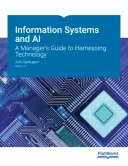
Information Systems & AI: A Manager’s Guide to Harnessing Technology strikes a balance between core course content and new developments in a rapidly evolving field. All chapters in this new version have received a substantial refresh of examples, statistics, and concepts.
Six Ideas to Take Into Your Next Class
Each one comes from John's Boston College classroom or the new Information Systems and AI v12.0 textbook.
Run a Verify-It Sprint
Hand students a claim, let AI answer it, then send them to the source. When John's students checked Chegg's claim that AI caused its collapse, the source showed most of the slide came before ChatGPT launched.
Open the semester with a slam
In the Promise and Peril Slam, each student gets one minute, poetry-slam style, to pitch the most exciting or most frightening development they found. The class votes, and every claim is open to questions from day one.
Attach four questions to every AI assignment
What did you use AI for? What worked, what failed, and what surprised you? What did you reject, and why? How do you know you can rely on it? John now asks for an AI reflection with every submission.
Build for a real client
John's management students, most with no programming background, build working products for The Campus School at Boston College, which serves students aged 3 to 21 with severe disabilities. They leave with a GitHub portfolio.
Build a RAG, then try to break it
Students load 6 to 12 real documents into a notebook tool, ask ten questions, and check the citations. Then John slips in a plausible document that is outdated or misleading. Did the AI catch it, and how confident was it?
End with a science fair
At semester's end, students set up what they built, science-fair style, for alumni, faculty, administrators, and the campus paper. Presenting in public raises the bar for everyone in the room.
Questions From the Live Audience
Instructors asked, John answered. Each question plays from the moment it was asked.
How do you handle students who refuse to use AI because of its environmental impact?
Treat the concern as legitimate and bring it into the managerial frame: data-center backlash, painful trade-offs, and what kind of company a student wants to work for.
How do you balance lecture time with these activities?
It depends on how prepared students arrive. Introduce a topic in one session and run a slam in the next, or in the last half hour. The book is built for picking and choosing.
How do these activities work in a large-enrollment class?
Teams of two or three, presentations recorded on video, and review in cohorts by you, your TAs, or the class. The best ones present live.
How would you run them in an online course?
Line up one-minute video pitches in a Google Doc or YouTube playlist, play them back to back, and keep a stopwatch running for two minutes of Q&A after each.
I teach computer science. If students generate code with AI, how do they learn?
Teach the fundamentals, then extend them with AI each week. John's students work from an agents.md file and write an AI reflection with every code submission.
Can this work for reading construction drawings and building cost estimates?
Test several models on your own documents and keep a human approving every output. Then have the class share every place the AI got it wrong.
How do you teach a class with mixed levels of AI experience?
Introduce the AI skills you expect each week, and ask the students getting better answers to show how they got them. Surfacing features everyone can use keeps it fair.
Your host
“Students who build something are incandescent with an opportunity to share it.”
John Gallaugher teaches business and technology at Boston College's Carroll School of Management and writes Information Systems and AI, now in its 12th edition. He has spent decades turning management students into founders. Several have raised millions and built centimillion-dollar companies.

Bring Information Systems and AI Into Your Course
Version 12.0 publishes in November 2026, with the exercises in every chapter rewritten for the AI age. Explore the current edition in our catalog now, or browse the course slides John shares on his own site.